
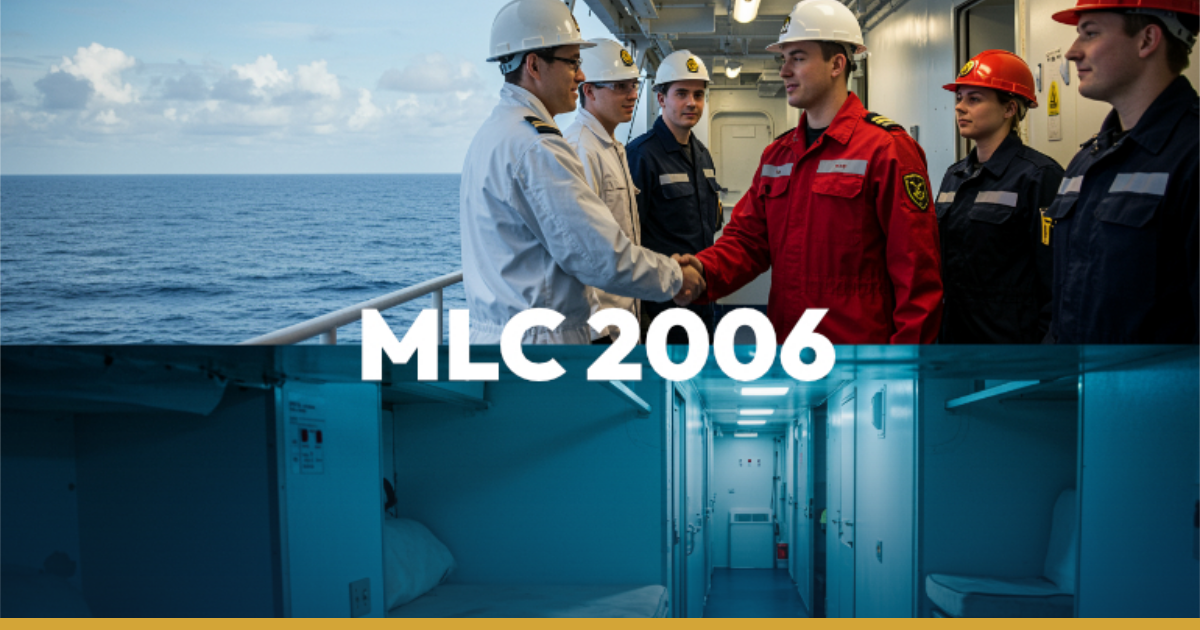
MLC 2006 Sets Standards for Seafarers’ Food and Living Conditions
Food and living conditions on board are among the minimum working and living standards established by the Maritime Labour Convention, 2006 — MLC 2006.
What MLC 2006 covers
The Australian Maritime Safety Authority identifies five main areas covered by the Convention:
- minimum requirements for seafarers to work on ships;
- conditions of employment;
- accommodation, recreational facilities, food and catering;
- health protection, medical care, welfare and social security protection;
- compliance and enforcement.
The MLC applies to seafarers working in any capacity on commercial seagoing ships operating internationally. Fishing vessels, warships and traditionally built vessels are among the exceptions.
Food and drinking water
MLC requirements cover the provision of food and drinking water, as well as the storage and handling of provisions. Food should be appropriate in quantity, nutritional value, quality and variety. The length of the voyage and seafarers’ religious requirements and cultural practices should also be considered, according to Skuld.
Accommodation and sanitary conditions
The standards cover crew cabins, sanitary facilities, ventilation, lighting and recreational spaces. They also address galleys, food storage and access to clean drinking water, according to Astra Crew.
How to respond to violations
The MLC provides complaint procedures, while compliance is supported through inspection and certification. According to ITF Seafarers, serious or repeated violations, or hazards to seafarers’ health, safety or security, may result in the ship being detained.