
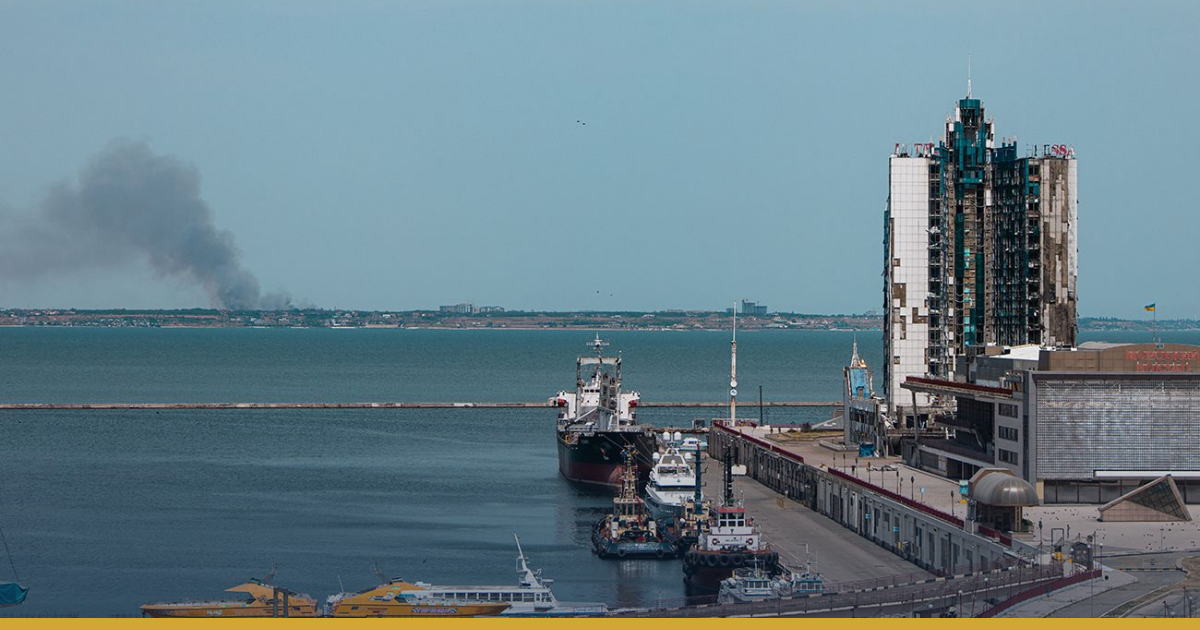
Russian Strikes Slow Operations at Greater Odesa Ports
What happened
In July, Russia intensified strikes on port infrastructure in Odesa region, causing a practical slowdown in parts of vessel traffic to the Greater Odesa ports. The ports were not formally shut down: vessels continued to enter and leave, but the number of calls decreased. According to USM, no vessel passed through the Ukrainian maritime corridor on July 22, while container operators began adjusting their services. Maersk temporarily suspended its service through Chornomorsk and redirected import cargo to Constanta in Romania.
Why it matters for seafarers
For crews, the main consequence is not only voyage delays but also higher safety risk while staying in ports or approaching them. USM reported casualties among seafarers after Russian strikes and cited a call by the Indian seafarers’ union to urgently evacuate the crew of MV AMIR1 from Chornomorsk. Shipowners have become more cautious about sending vessels to Ukrainian ports, while some exporters reduced deliveries to terminals to avoid accumulating grain, railcars and trucks without clarity on vessel arrival dates.
Alternative routes
As uncertainty around the maritime corridor grows, more cargo is being redirected through the Danube, western border crossings and Constanta. These routes help keep exports moving, but they cannot fully replace the capacity of the Greater Odesa ports. Stronger demand for alternative logistics has already pushed up freight rates on Danube-related routes, while low water levels limit barge capacity. For seafarers, this means more voyage changes, more complicated logistics and continued dependence on the security situation in the Black Sea.
Source: usm.media